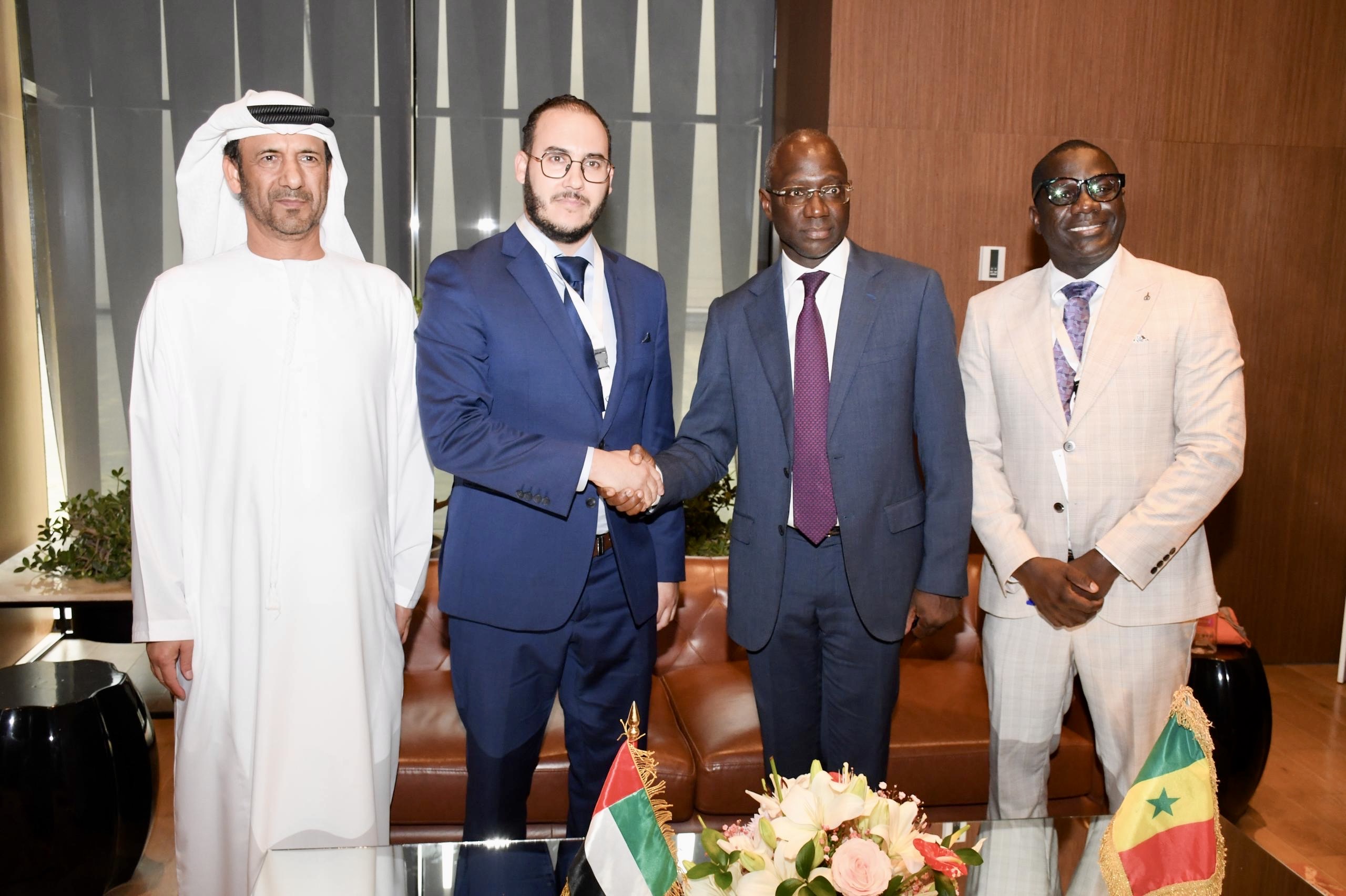


The future of energy in Africa will not be defined solely by technology or capital. It will increasingly depend on the ability of governments and private sector leaders to align around long-term strategic infrastructure visions.
In this context, recent discussions held in Abu Dhabi between senior leadership from the private sector and the Prime Minister of Senegal reflected a broader reality shaping emerging economies today: energy is becoming a central pillar of economic sovereignty, industrial competitiveness, and regional resilience.
As African economies continue to urbanize and industrialize, pressure on existing energy infrastructure is accelerating. At the same time, demand for reliable electricity is expanding across agriculture, industry, digital infrastructure, mobility, and public services.
For countries seeking sustainable growth, the challenge is no longer limited to increasing generation capacity. The real challenge is building integrated energy ecosystems capable of supporting long-term economic transformation.
This is particularly relevant in West Africa, where energy access, grid stability, and industrial development remain deeply interconnected.
The discussions focused on strategic initiatives capable of supporting Senegal’s broader ambitions in renewable energy, infrastructure modernization, and energy efficiency. But beyond individual projects, the exchange reflected a growing recognition that future energy systems must be designed with resilience, scalability, and productive economic use at their core.
One of the most important shifts currently taking place across emerging markets is the transition from isolated infrastructure projects toward coordinated ecosystem development. This includes the integration of renewable generation, energy storage, mobility infrastructure, and intelligent energy management systems within unified long-term frameworks.
Such an approach is increasingly viewed not only as an environmental necessity, but as an economic imperative.
Countries capable of securing stable, affordable, and sustainable energy infrastructure will strengthen their industrial competitiveness, improve food and energy security, and create more resilient economic models.
The meeting also highlighted the importance of international cooperation in accelerating these transitions. The development of large-scale infrastructure increasingly requires collaboration between governments, private sector operators, technology providers, and financial institutions.
This model of partnership is becoming essential to bridge the gap between national ambitions and execution capacity.
For Senegal, the growing focus on renewable energy and infrastructure modernization reflects a broader ambition to position itself as a regional platform for sustainable growth and innovation.
And across Africa more broadly, these discussions illustrate a larger transformation already underway:
Energy is no longer being viewed simply as a utility sector.
It is becoming a strategic instrument of national development.